
How to Reduce Humidity in a Small Apartment Without Doing Any Construction Work
Dampness can become a common problem in bathrooms, bedrooms, and homes with poor ventilation. Fogged-up windows, a musty smell, or condensation are signs that you need to better control the indoor environment.
If you rent, you often can’t make major renovations, but there are simple solutions to control humidity and improve your daily comfort.
Disclosure: Some links in this guide may be affiliate links. As an Amazon Affiliate, I earn from qualifying purchases.
First: Find out how much humidity you have
Before buying any device, it’s most helpful to know roughly what the humidity level is inside your home.
A small digital hygrometer lets you monitor relative humidity and check whether certain rooms accumulate more moisture than others.
It also helps you determine whether opening windows or using a dehumidifier is actually improving the situation.
1. Digital Hygrometer for Monitoring Humidity
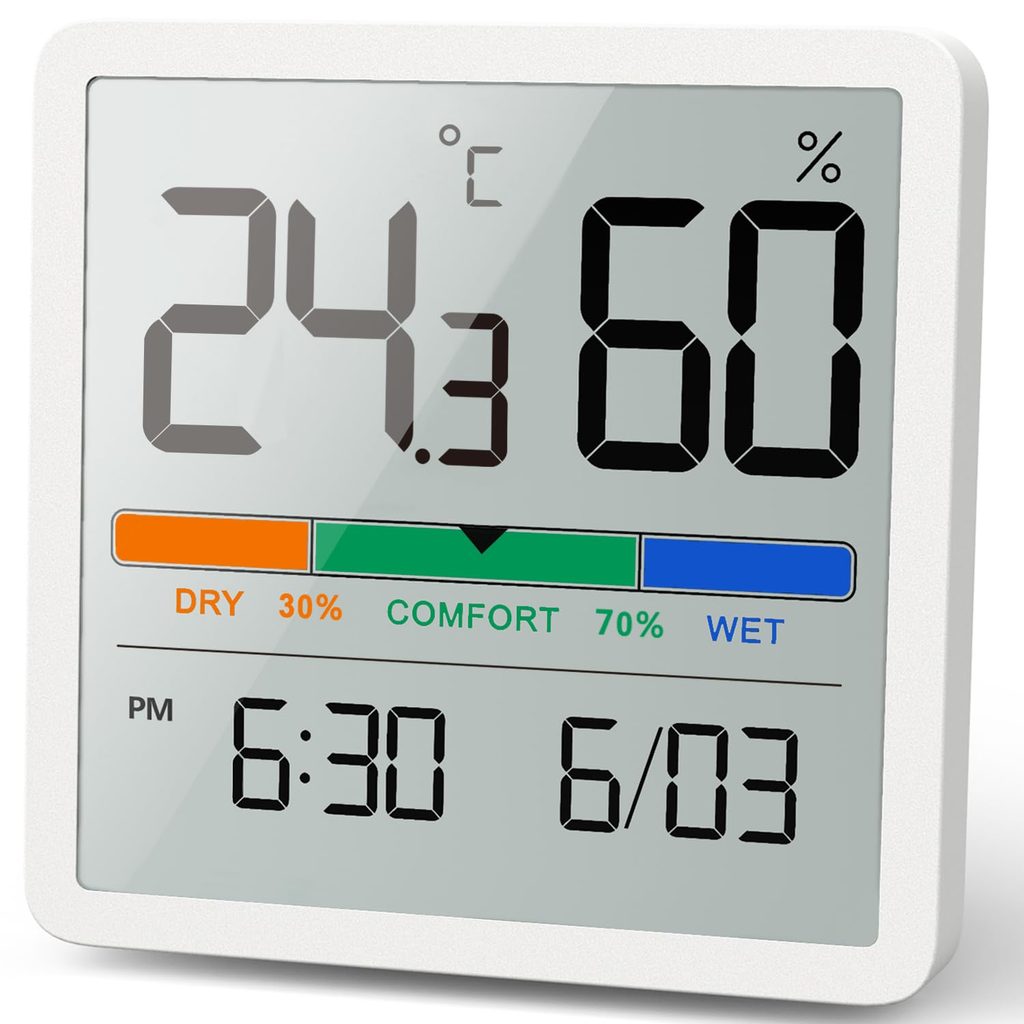
This is probably the simplest and most affordable solution to get started.
It lets you check the temperature and humidity in bedrooms, the bathroom, the living room, or the kitchen and identify which areas need more ventilation.
Before buying: Look for a display that’s easy to read and a size that allows you to move it between rooms.
Affiliate link
2. Compact dehumidifier for small apartments
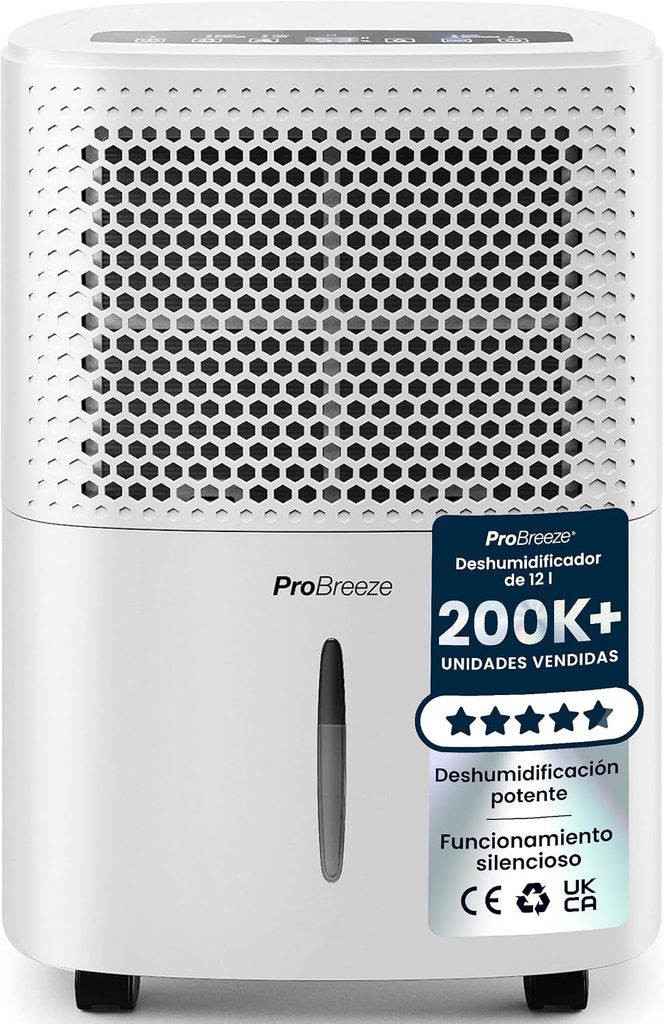
When ventilation isn’t enough, a dehumidifier can help remove some of the moisture from the air.
Compact models are especially useful for bedrooms, small bathrooms, home offices, or apartments where there isn’t room for large appliances.
Before buying: check the recommended coverage area, tank capacity, power consumption, and noise level.
Affiliate link
3. Non-electric moisture absorber
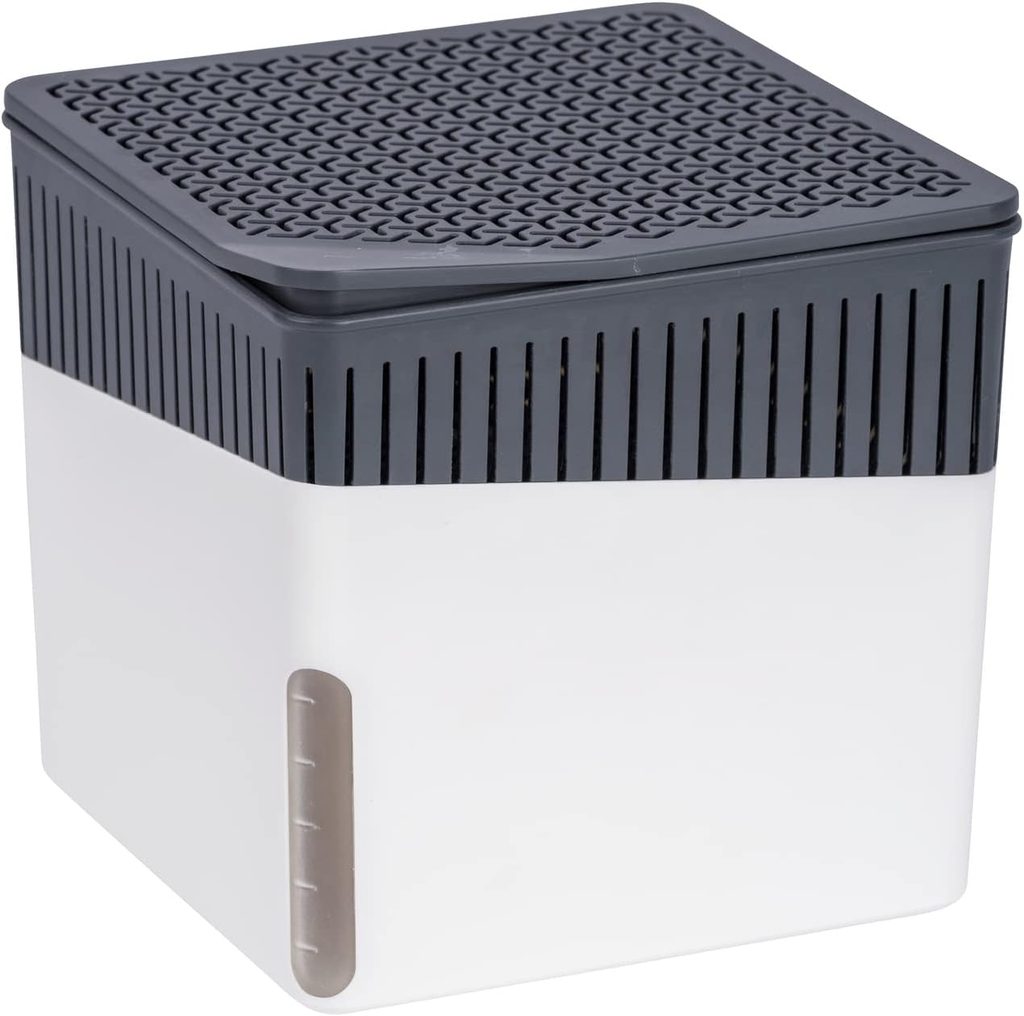
For closets, small bathrooms, storage rooms, or enclosed spaces, a passive dehumidifier can be useful.
It doesn’t need to be plugged in and takes up very little space, although its capacity is much lower than that of an electric dehumidifier.
Before buying: check what size area it’s designed for and how often it needs to be replaced.
Affiliate link
Ventilation is still important
These products can help, but they are no substitute for proper ventilation.
After showering, cooking, or drying clothes indoors, a significant amount of water vapor is generated. Whenever possible, it’s best to refresh the air and avoid keeping rooms closed for long periods.
Watch out for structural causes
If you notice persistent stains, water leaks, or moisture that quickly returns after cleaning and ventilating, there may be a problem with the building or its systems.
In that case, a dehumidifier can temporarily reduce indoor humidity, but it does not fix a leak, seepage, or a structural problem.
Which solution to choose
To start, I would follow this order:
Hygrometer → measure first.
Ventilation → check if conditions improve.
Dehumidifier → if humidity remains high.
Absorbers → for small enclosed spaces.
This way, we avoid recommending the purchase of a large unit when it may not be necessary.
More solutions for small apartments
You can also check out our guides on: